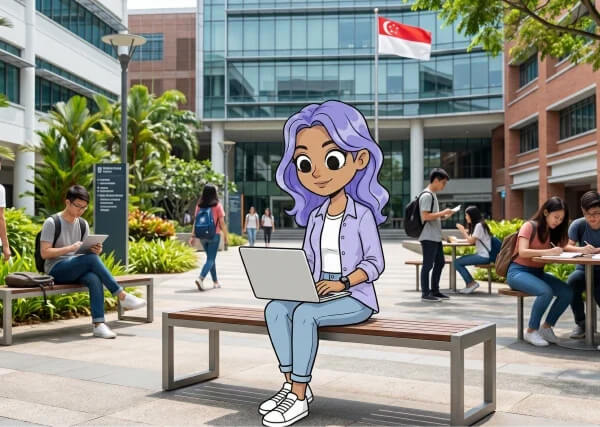

Study in Singapore
- REGION
- Southeast Asia
- LANGUAGE
- English & Mandarin
- CURRENCY
- SGD (S$)
- TIME ZONES
- UTC+8
- CLIMATE
- Tropical & humid
People come to Singapore for academic study, professional training, employment, and business opportunities. Entry requirements and visa pathways vary depending on the purpose of stay and the institution or employer involved. English-language proficiency may be required for admission, employment, or professional registration.
SINGAPORE MINISTRY OF EDUCATION
Official information on studying in Singapore and admission pathways for international students
ICA SINGAPORE – STUDENT'S PASS
Official visa and Student’s Pass information for international students in Singapore
NATIONAL UNIVERSITY OF SINGAPORE (NUS)
One of Singapore’s leading global universities, offering internationally recognized programs and research opportunities
Many universities, professional programs, and employers in Singapore require proof of English-language proficiency. The TOEFL iBT test accepted by institutions and organizations worldwide is one of the most trusted ways to demonstrate readiness for English-medium study, professional communication, and global mobility.
Frequently Asked Questions
Start by comparing the programs that match your goals, then review each institution’s entry requirements, tuition, campus environment, and internship or career opportunities. In Singapore, students often consider autonomous universities, private institutions, and specialized schools depending on their field of study. It is also important to confirm that the institution is officially recognized and that the program fits your long-term academic or professional plans.
In Singapore, universities typically offer bachelor’s, master’s, and doctoral degrees. Colleges and other post-secondary institutions may offer diplomas, foundation programs, or specialized professional training. The exact terminology varies by institution, so it is best to check what qualification the program leads to before you apply.
Undergraduate study is the first level of university education after secondary school, pre-university qualifications, or a diploma, and usually leads to a bachelor’s degree. Graduate study comes after a bachelor’s degree and includes advanced qualifications such as graduate diplomas, master’s degrees, and doctorates.
The academic year in Singapore varies by institution, but many universities begin in late July or August and run through April or May. Some schools use a two-semester system, while others may use trimesters or other term structures. Always check the institution’s academic calendar for exact dates.
Age expectations depend on the level of study and the institution. For university programs, applicants are generally expected to have completed the equivalent of 12 years of formal education or the required entry qualification. For younger students entering mainstream schools, Singapore’s Ministry of Education provides age guidance by grade level, and Student’s Pass requirements also apply to eligible international students.

TOEFL® is more than just an English test. Here’s how it unlocks new doors and sets you up for success at university and what comes after.

Learn how to choose the right exam based on your goals, university requirements, test format, scoring, and study preferences.

Prepare for the TOEFL iBT® 2026 with this complete 3-month study plan. Improve your skills, build confidence, and achieve your target score.
Official tourism site for travel, food, and culture
Student's Pass details
Singapore scholarships portal